
 PREVIOUS

Newsletter # 139

In vivo studies
Functional validation of an inflammasome-driven cognitive impairment model
Alzheimer's Disease, Parkinson's Disease, Stroke, Traumatic Brain Injury, Long COVID
EVIDENCE FOR NLRP3-DRIVEN COGNITIVE IMPAIRMENT
-
-
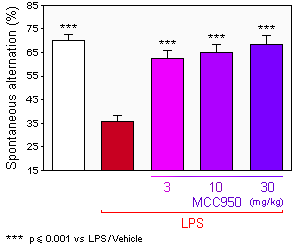
In Neurofit's LPS-induced cognitive impairment model, mice display a marked reduction in T-maze spontaneous and continuous alternation performance. Treatment with the selective NLRP3 inhibitor MCC950 produces a robust, dose-dependent restoration of cognitive function, returning performance close to healthy control levels.
CONVERGENT PHARMACOLOGICAL EVIDENCE
-
Active Compounds (Reversed Deficit)
• N-acetylcysteine (NAC)
• DHA (Docosahexaenoic acid)
• Resveratrol • Ibuprofen
• Indomethacin
• Sulindac
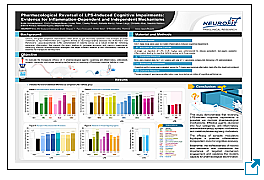
Andriambeloson et al.
"Pharmacological Reversal of LPS-Induced Cognitive Impairments: Evidence for Inflammation-Dependent and Independent Mechanisms." Neuroscience 2025, San-Diego, USA
Ineffective Compounds (No Significant Effect)
• Nilotinib
• Methylene blue
-
The cognitive deficit is also reversed by compounds known to modulate inflammatory pathways, including N-acetylcysteine (NAC), DHA, resveratrol, ibuprofen, indomethacin, and sulindac.
In contrast, nilotinib and methylene blue failed to improve performance, demonstrating pharmacological discrimination and supporting a central role for inflammasome-driven neuroinflammation.