
Marble Burying test in mice
-
-
Presentation
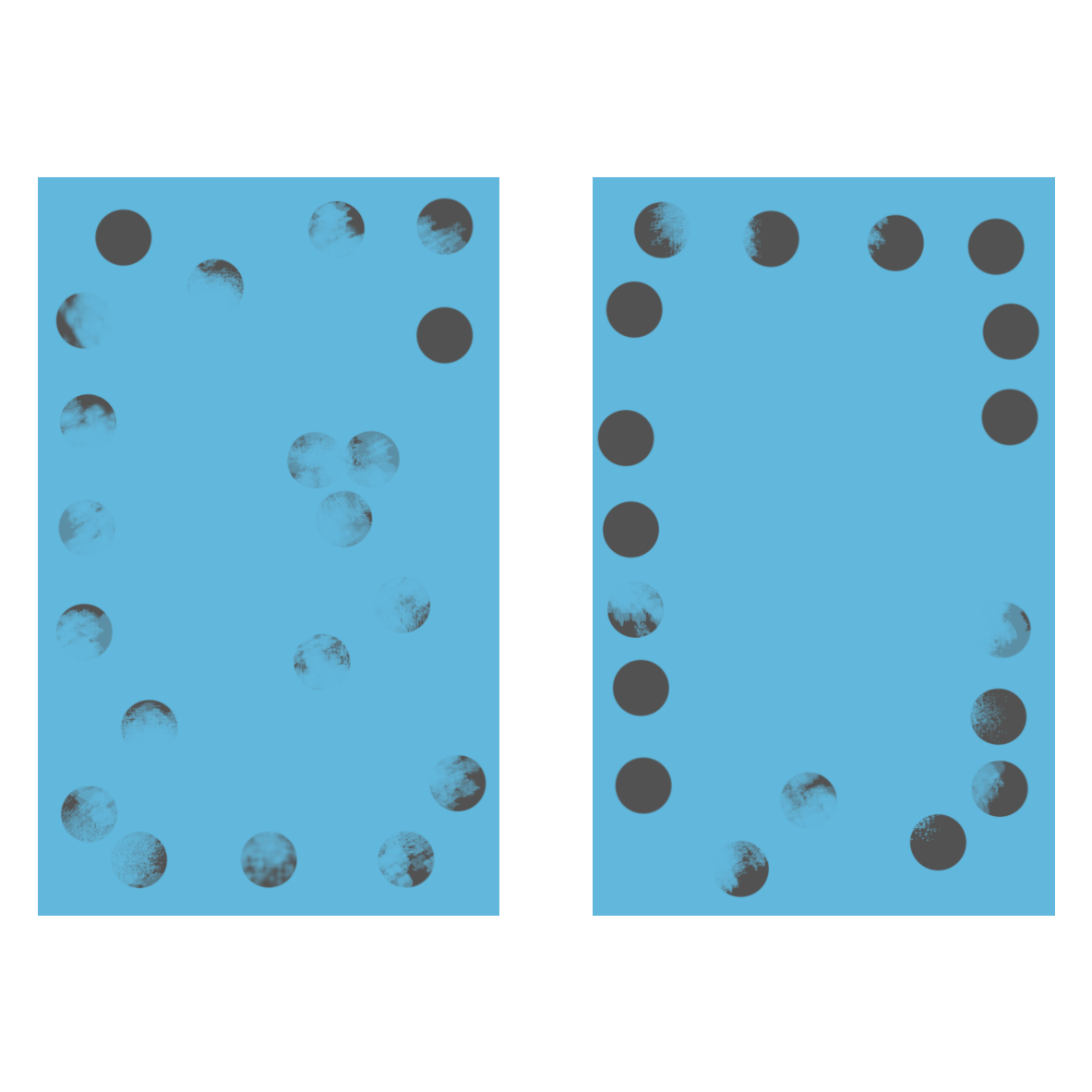
- The Marble Burying test is used to record the number of marbles buried by mice placed in a novel environment.
Mice, which are placed individually in a cage, bury glass marbles that are present in the cage. This test has some predictive value for anti-depressant and/or anxiolytic drugs. It has been shown to be sensitive to benzodiazepines as these compounds reduce burying behaviour when compared to vehicle-treated control mice, without inducing changes in locomotor activity. Results have shown that in addition to benzodiazepines, this test system is sensitive to the effects of selective serotonin reuptake inhibitors (SSRIs), serotonin noradrenaline reuptake inhibitors (SNRIs) and tricyclic antidepressants (TCAs).
- The Marble Burying test is used to record the number of marbles buried by mice placed in a novel environment.
-
Compound testing
Compound testing addresses the effect of acute treatment on the total number of buried marbles. Investigation of the effect of subchronic treatment is also possible.
-
Endpoints

Number of marble buried (n)
 Diazepam model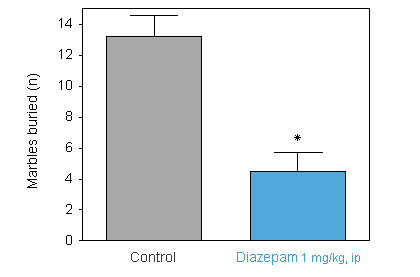
-
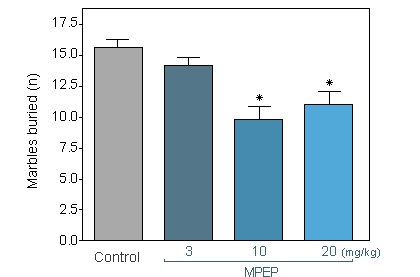
In the Marble burying test, MPEP shows a dose-dependent reduction in the number of buried marbles by the mouse which suggests a reduction of repetitive behavior by the treatment. -
-
The marble burying task has also been widely applied to assess repetitive/persistent behavior relevant to obsessive-compulsive disorder (OCD) and Autism Spectrum Disorder (ASD) in the mouse. The test paradigm has been shown to be sensitive to pre-treatment with mGluR5 antagonists. For example, MPEP has been reported to ameliorate various Autism phenotypes in the mouse (1) .
(1) Repetitive self-grooming behavior in the BTBR mouse model of autism is blocked by the mGluR5 antagonist MPEP. Neuropsychopharmacology. 2010 Mar;35(4):976-89
-
You could also be interested in
-
Light-Dark
The light dark test is used to evaluate the relative anxiety status of mice.
Elevated Plus Maze
The EPM test is used to evaluate the relative anxiety status of mice or rats.
-
Panic anxiety
Anxiety can be defined as a response to threats that causes nervousness and fear.
Spontaneous paradigm
Spontaneous paradigm is based on the natural reaction of rodents to stress stimuli.